
Debt review fees in South Africa: costs and questions to ask
14 November 2025 · Debt Review Centre
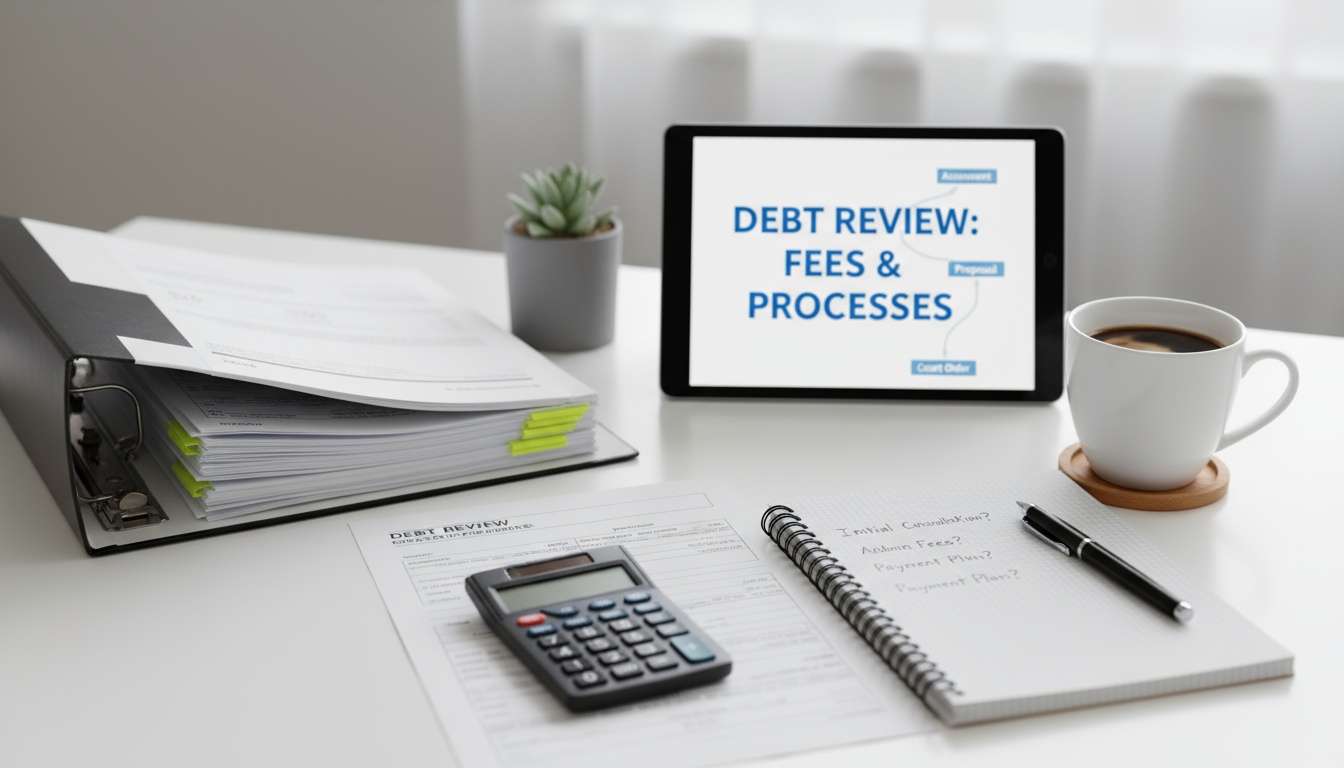
Debt review has once-off and ongoing charges. DRC’s initial enquiry and calculator are free, but a formal application is a separate step. Before signing, ask for a written breakdown showing every fee, VAT, payment dates and how much will reach your creditors.
What the NCR's published fee guideline says
The figures below summarise the NCR’s 2018 fee guideline. They exclude VAT and are a reference, not a personalised DRC quote.
- Application: R50.
- Administration: R300 per application.
- Restructuring: the lower of the distributable amount and R8,000 for one applicant, or R9,000 for consumers married in community of property.
- Aftercare: 5% of the distributable amount, capped at R450 per month.
Legal work, payment distribution and other applicable charges must also be disclosed. Ask which fees apply to your case and when they become payable. The restructuring charge is not automatically the maximum.
Work through the quote in rand
For an illustration, suppose a single applicant’s distributable amount is R5,000. Comparing R5,000 with the R8,000 cap gives a restructuring fee of R5,000 before VAT under the published guideline. This calculation does not include legal charges or tell you how much each creditor receives in the first month.
Ask for a month-by-month payment schedule. Check the amount you pay, the amount allocated to fees and the amount allocated to each account. A headline monthly payment alone cannot show the full cost.
Questions to ask before signing
- Does this quote include VAT? Which line items exclude it?
- What work does each once-off fee cover, and when is it due?
- What are the attorney’s charges and any court or tribunal filing costs?
- Who distributes payments and what does that service cost?
- Are insurance or other products optional, and have I agreed to each separately?
- What happens to fees if my circumstances change or the application does not proceed?
- What are the proposed repayment term and total amount paid, including fees?
Who receives your monthly payment?
A debt counsellor manages the assessment and repayment proposal. Ask whether payments will go through an NCR-registered payment distribution agent or directly to credit providers under the agreed arrangement. Request statements and keep receipts. The NCR says debt counsellors must not collect and distribute consumers’ repayment funds to creditors themselves.
Does a lower instalment mean debt review costs less overall?
Not necessarily. A smaller payment can come with a longer term. Compare the total repayment cost, account by account, with the alternatives available to you. Neither an advertised percentage reduction nor a calculator result replaces a written proposal.
See how debt review works, meet DRC’s registered debt counsellors and use the free assessment checklist to prepare your questions.
Source
The NCR’s explanation of debt counselling costs and responsibilities gives further context. Ask DRC for its written fee disclosure for your circumstances before applying.
To explore how a rate or repayment period changes an illustrative credit cost, use the total cost of credit calculator. The calculator does not replace your written debt counselling quote or include every charge in a formal plan.
Related questions and next steps
- Speak to a registered debt counsellor
Find out what an assessment should cover and what support to ask about.
- Credit-card interest and debt review
Understand how interest affects repayments and what to discuss with a counsellor.
- The cost of a payment holiday
See why postponing a payment can change the amount you repay.
- Total cost of credit
Explore how interest, payments and term affect repayment cost.
See what your monthly payment could look like
Use the free calculator to enter your income, expenses, and debt payments. You will get an immediate estimate of your possible debt review payment and monthly savings. It is not an application.